
演讲嘉宾学术观点
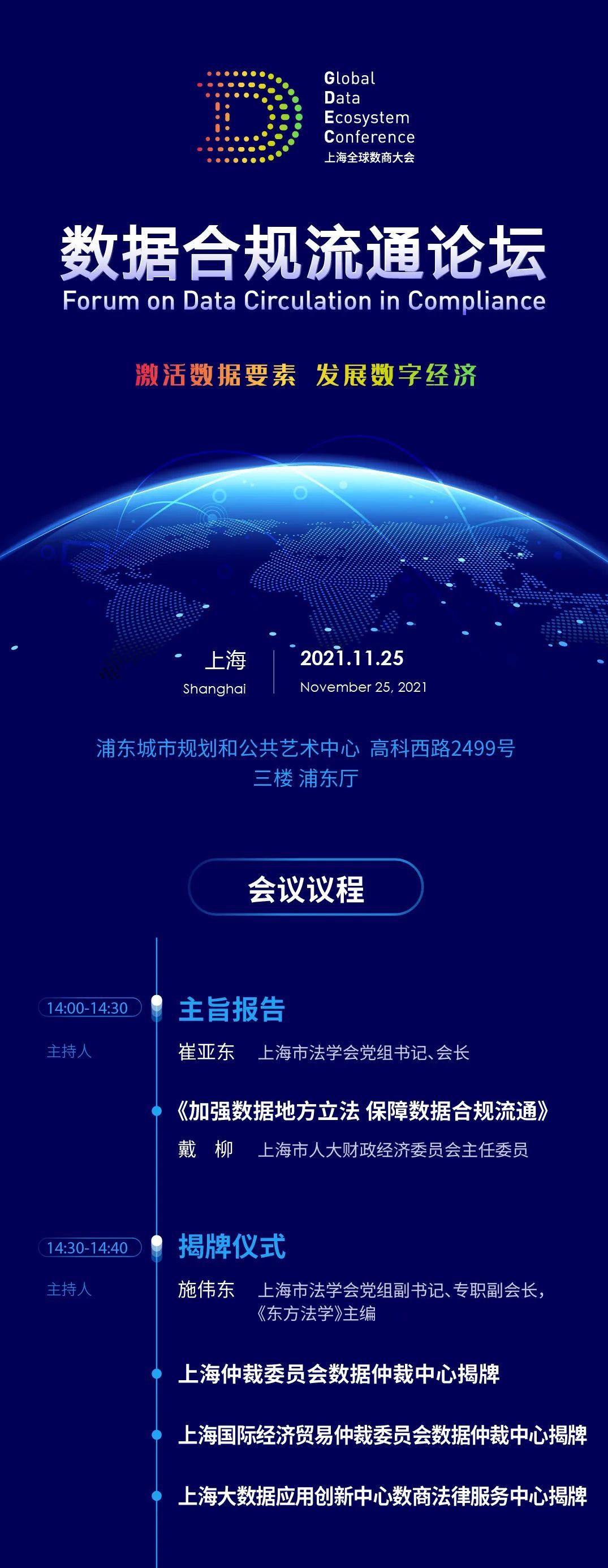
戴 柳
DAI Liu
上海市人大财政经济委员会主任委员
Chairman of the Finance and Economic Committee of Shanghai Municipal People’s Congress
学术观点 Points of View:
数据立法在于充分激发数据要素活力。
Data legislation is to fully stimulate the vitality of data elements.
明确数据权益是数据合规流动的基本前提。
Clarifying data rights and interests is the basic premise of data compliance flow.
在安全的基础上开展公共数据共享、开放和市场数据的交易、跨境流通。
On the basis of security to carry out public data sharing, open trade with market data and cross-border circulation.
高富平
GAO Fuping
华东政法大学数据法律研究中心主任、教授
Director of Research Center for Data and Law and professor at East China University of Political Science and Law
学术观点Points of view:
数据是社会可用资源,数据要素市场建设的关键是藏数于民,赋能社会。
Data are available social resources. The key to building of the data element market is to share data with the people and enable the society.
数据的价值在于计算,凡是分享数据,供他人计算使用数据的方式都是数据流通。
The value of data lies in calculations. Ways to share data and provide data for others to calculate or use are all data circulation.
没有不可交易的数据,只有不适合的数据交易制度。数据交易需要配套数据基础设施,需要新市场范式。
There’s no data not tradable, only inappropriate data exchange system. Data exchange requires supporting data infrastructure and a new market paradigm.
王晓妹
WANG Xiaomei
上海市大数据中心副主任
Deputy Director of Shanghai Big Data Center
学术观点Points of view:
《上海市数据条例》框架下的公共数据流通,包括共享、开放和授权运营。
Public data circulation under the framework of the "Shanghai Data Regulations" includes Sharing, Openness and Authorized Operations.
公共数据流通制度的核心价值目标是促进公共数据利用和公共利益最大化。
The core value goal of the public data circulation system is to promote the use of public data and maximize public interests.
公共数据流通的制度设计需要在多维价值冲突下实现动态平衡。
The system design of public data circulation needs to achieve dynamic balance under multi-dimensional value conflicts.
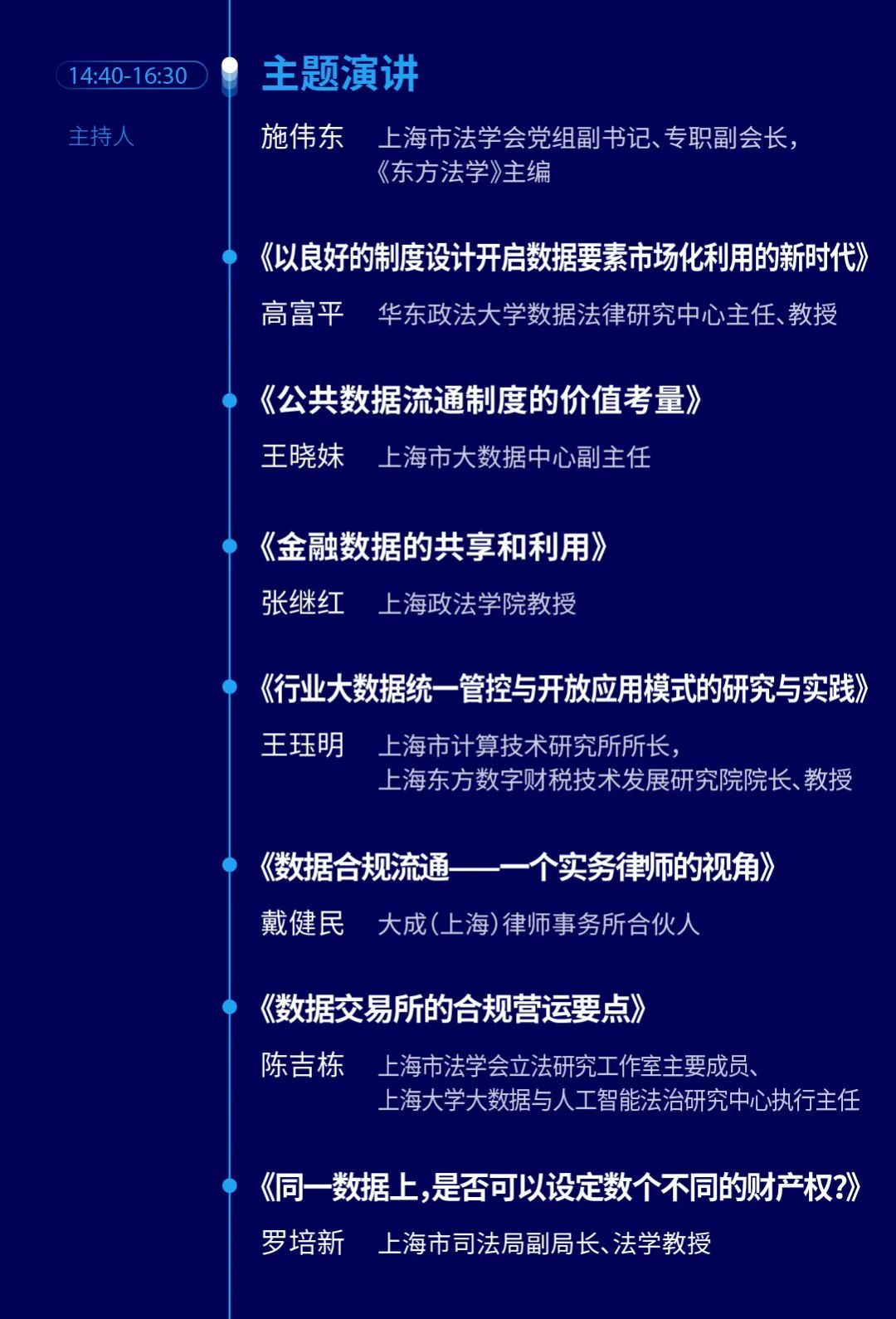
张继红
ZHANG Jihong
上海政法学院教授
Professor at Shanghai University of Political Science and Law
学术观点Points of View:
金融数据的共享、流通和利用,深度挖掘了数据的经济价值,减少了信息的不对称和机会主义行为,降低了“逆向选择”,促进供需的精准匹配,显著提升了金融市场的运行效率。
The sharing, circulation and utilization of financial data deeply excavates the economic value of data, reduces information asymmetry and opportunistic behavior, reduces ‘Adverse Selection’, promotes the accurate matching of supply and demand, and significantly improves the operating efficiency of financial markets.
金融数据共享和利用,应当遵循合法、正当、最小必要原则,针对不同类型不同级别的金融数据采取差异化的安全和保护措施。
The sharing and utilization of financial data shall follow the principles of legality, propriety and minimum necessity, and adopt differentiated security and protection measures for different types and levels of financial data.
通过隐私安全增强技术、多方安全计算、联邦学习、可信计算环境等技术,为金融数据共享和利用提供安全、可信的运营环境,实现金融数据的“可用而不可见”。
Provide a secure and trusted operating environment for financial data sharing and utilization through privacy security enhancement technology, multi-party secure computing, federated learning, trusted computing environment and other technologies, so as to realize ‘Available but Invisible’ financial data.
王珏明
WANG Jueming
上海市计算技术研究所所长,上海东方数字财税技术发展研究院院长、教授
Director of Shanghai Institute of Computing Technology, Dean of Shanghai Oriental Digital Finance And Taxation Technology Development Research Institute, Professor.
学术观点Points of view:
行业数据规范化、标准化的治理是大势所趋,有效治理才能带来有效供给。
The Compliance and Standardization governance of industry data is the general trend, effective governance can bring effective supply.
打破数字技术与行业应用场景的隔阂,实现行业数字化价值。
Break the barriers between digital technology and industry application scenarios, and realize the digital value of the industry.
遵循改革的逻辑,将实践经验及时纳入法规范畴,以指导推动更大范围的实践。
Follow the logic of reform, bring the practical experience into the scope of laws and regulations in time, to guide and promote a wider range of practice.
戴健民
DAI Jianmin
大成(上海)律师事务所合伙人
Partner of Dentons (Shanghai) Law Firm
学术观点Points of View:
数据合规流通,是数字经济健康发展的重要基石。
Data circulation of compliance is the foundation stone of the healthy development of digital economy.
数据合规流通规则的构建,既要借鉴国际成熟的经验或有益探索,更要基于我国数字经济发展的战略规划和发展方向。
Establishment of rules for data circulation of compliance should both draw on mature experience or helpful research of other countries and be based on the strategic planning and development orientation of China’s digital economy.
数据合规流通,要兼顾国家安全,公共利益,企业权益和个人信息权益之间的动态平衡。
Data circulation of compliance should take account of the dynamic equilibrium of national security, public interest, corporate interests and the rights and interests of personal data.
陈吉栋
CHEN Jidong
上海市法学会立法研究工作室主要成员、上海大学大数据与人工智能法治研究中心执行主任
A Leading Member of the Workshop on Legislative Studies of Shanghai Law Society and Executive Director of Research Center for the Rule of Law in Big Data and Artificial Intelligence at Shanghai University
学术观点Points of View:
数据交易是流通的核心,交易所是数据交易的。
Data trading is the center of circulation, and exchanges the hub of data trading.
数据的生命在于流通!
The life of data lies in circulation!
正是因为有了个人信息及其保护,数据法才成了闪烁着人文主义光辉的人法,数据问题才具有了迷人的理论色彩!
It is with personal information and its protection that data law becomes a human law shimmering with humanist light and that data issues take on a fascinating theoretical dimension!
罗培新
LUO Peixin
上海市司法局副局长,法学教授
Deputy Director of Shanghai Municipal Bureau of Justice, Professor of Law
学术观点Points of view:
“数据权益”具有正当法源,是指附着于数据之上的权利与利益,兼有人格权与财产权的属性。自然人的人格权利益,具有优位保护价值。
"Data Rights" has a legitimate legal sources, which refers to the rights and interests attached to data, as well as the attributes of personality rights and property rights. The personality rights of natural persons have superior protection value.
对于合法处理数据形成的数据产品和服务,赋予财产权,固无问题;对于合法取得的数据,赋予财产权,亦具法理基础。
There is no problem in granting property rights to data products and services formed by legally processing data, and granting property rights to data obtained legally also has a legal basis.
赋予数据财产权,并不意味着否认自然人对于信息的人格权益。事实上,保护自然人的信息人格权益,是行使财产权益的前提。
Granting data property rights does not mean denying the personal rights of natural persons to information. In fact, protecting the information personality rights of natural persons is a prerequisite for exercising property rights.
赋予数据财产权,并不意味着赋予数据所有权。基于数据无限复制与非排它占有的特性,原始数据权人的财产权益与企业的数据财产权益,可以并行不悖,多个主体可以同时对同一数据拥有财产权益。
Granting data property rights does not mean granting data ownership. Based on the characteristics of unlimited duplication of data and non-exclusive possession, the property rights of the original data owner and the data property rights of the enterprise can be parallelized, and multiple entities can have property rights in the same data at the same time.
责任编辑:
莫 莉 金惠珠