Jing’an reports 30 percent jump
in New Year holiday spending
Jing’an rang in the new year with a sharp pickup in consumer activity, as holiday spending surged across its major commercial areas.
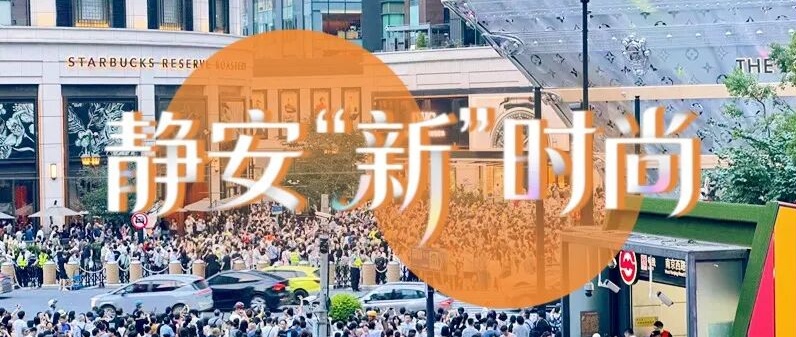
Between January 1 and 2, sales at 33 key commercial enterprises in the district rose nearly 30 percent from a year earlier. Major shopping hubs, including Nanjing Road W., Suhewan (Suhe Bay) and Daning, drew more than 656,000 visits, pointing to a strong rebound in foot traffic.
New overnight consumption vouchers boosted holiday spending. No advance registration or coupon “grabs” were required for nighttime economy zones and Nanjing Road W. commercial areas. Alipay’s “Peng” function offered instant discounts at checkout for dining, retail and beauty services, increasing nighttime spending.
Commercial zones also introduced themed pop-ups and immersive experiences to keep consumers engaged.
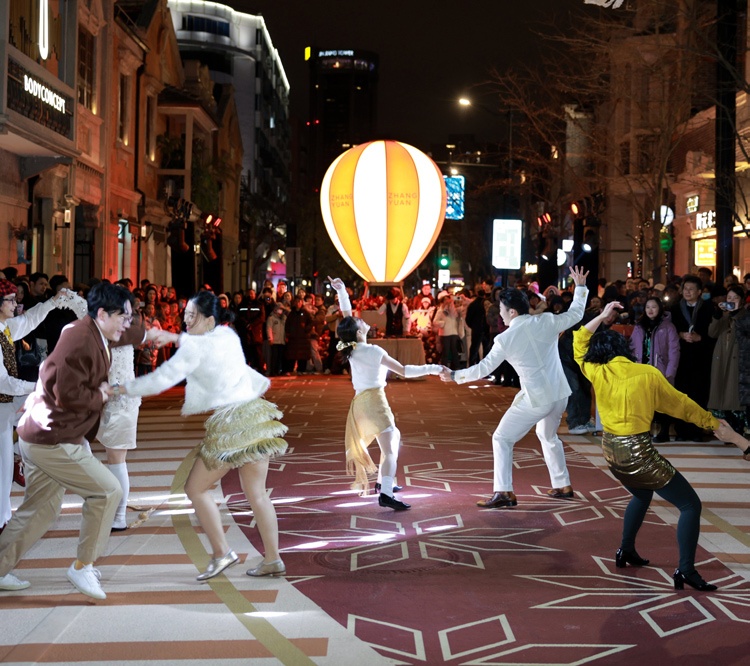
On Nanjing Road W., retailers leaned into premium and trend-led offerings. HKRI Taikoo Hui launched its “Oh là là” winter campaign, posting nearly 40 percent year-on-year sales growth over the holiday. Jing’an Kerry Center rolled out Swirling Karneval, while Zhangyuan hosted a PIAGET pop-up experience store.
In Suhewan, art and life were integrated. Jing’an Joy City hosted a midnight countdown party for New Year’s Eve, offering younger consumers city views, interactive activities and dining. Twelve pop-up events ran simultaneously inside the mall, helping drive a noticeable rise in sales. The nearby Suhewan MixC World “Poetry Wander” event along Suzhou Creek saw sales rise nearly 50 percent from a year earlier.
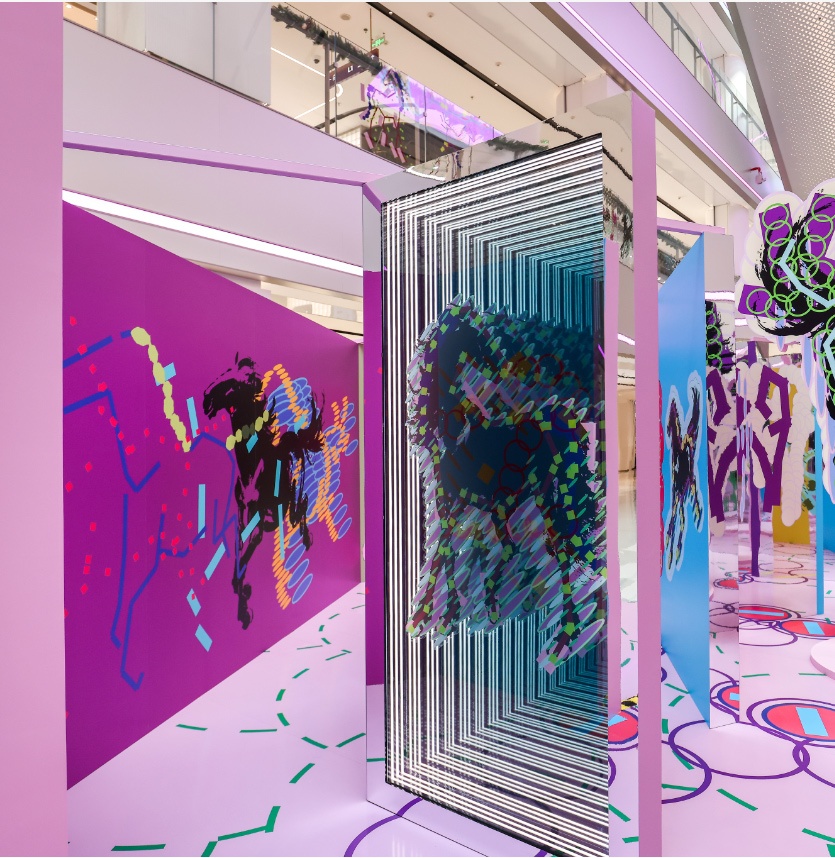
Daning, meanwhile, targeted families and experience-driven spending. Jiuguang Center unveiled the 1,000-square-meter “Pingu Polar Adventure Island,” featuring a real ice rink. Jing’an IMIX Park brought “My Little Pony Fairytale World” to Shanghai for the first time, attracting large numbers of families.
Cultural and tourism offerings also played a growing role in driving consumption. Jing’an’s commercial areas hosted nearly 20 cultural events during the holiday, sending culture- and tourism-related spending in core shopping zones up almost 30 percent year over year. Events included “Yao A Yao” VR music film screenings at Zhangyuan, a Xu Beihong art exhibition at CITIC Square and Chen Chuanduan’s solo show at Fotografiska Shanghai.
Live performances added to the momentum. Dozens of shows, including the “Sleep No More” New Year’s Eve party, the Victor Wong concert and multiple comedy specials, were staged across the district, creating a growing “theater, shopping district and outdoor space” performance network and giving residents and visitors more reasons to stay out and spend money.
Jing’an sees steady economic growth,
driven by consumer activity.
Over the past five years, Jing’an District has seen steady economic growth. Its GDP rose to above 300 billion yuan (US$43.05 billion), while public budget revenue exceeded 30 billion yuan. The downtown district is home to 94 office buildings generating over 100 million yuan each in annual tax revenue, and its foreign-related economy has ranked first among Shanghai’s central districts for ten consecutive years.
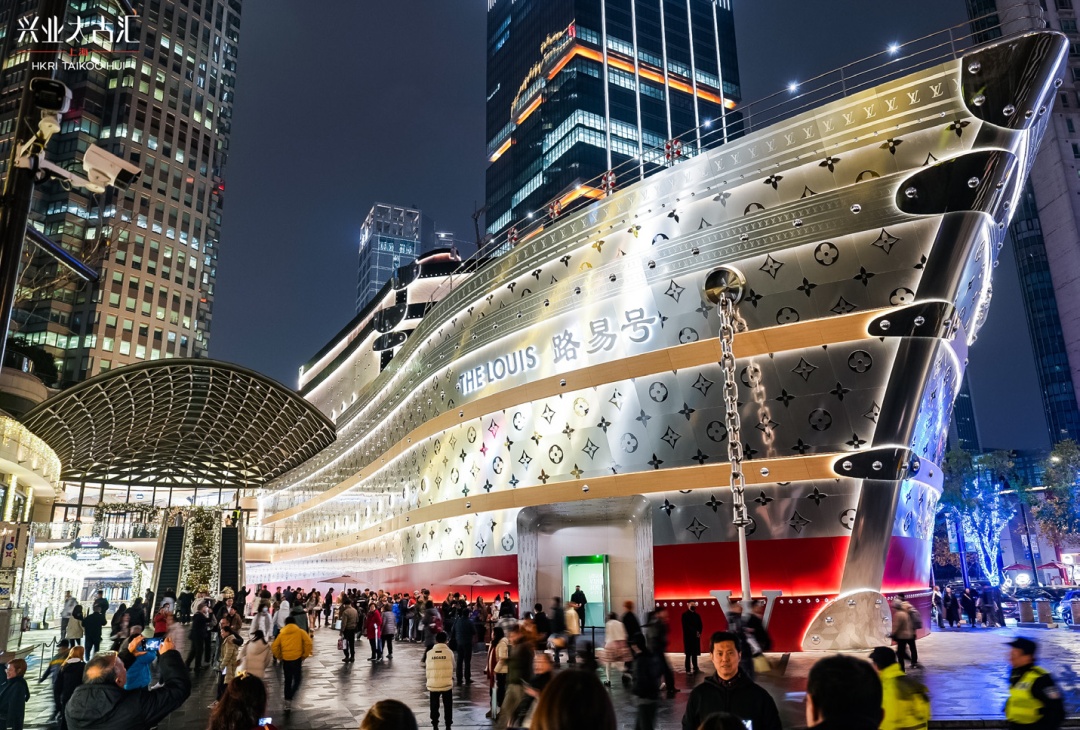
Consumer activity remained a key driver. Retail sales of consumer goods stayed the highest among downtown districts, while the area continued to attract first-to-market brands, adding 1,085 new store openings — the most in Shanghai. Commercial landmarks such as “The Louis” drew widespread attention. Jing’an also added 87 new regional headquarters of multinational firms and other corporates.
Key service industries, including commercial, financial and professional services, remained central to growth. Total merchandise sales stayed above 1 trillion yuan. The district launched Shanghai’s first high-quality imported products demonstration zone, opened a dedicated bonded warehouse at Zhangyuan, and was approved as one of the city’s first equity investment hubs. New business platforms, such as a one-stop service center for companies expanding overseas, further strengthened the business environment.
Urban renewal advanced steadily. Work on 47 scattered redevelopment sites was largely completed, making Jing’an the first among Shanghai’s major renewal areas to finish this task. Renovations of aging residential buildings moved forward, including upgrades in Fangua Long, while non-self-contained housing in Pengpu community was fully overhauled.
Public services also expanded. New initiatives included a three-stage after-school care program, community childcare facilities known as “baby houses,” and an integrated care model to better coordinate services for residents.
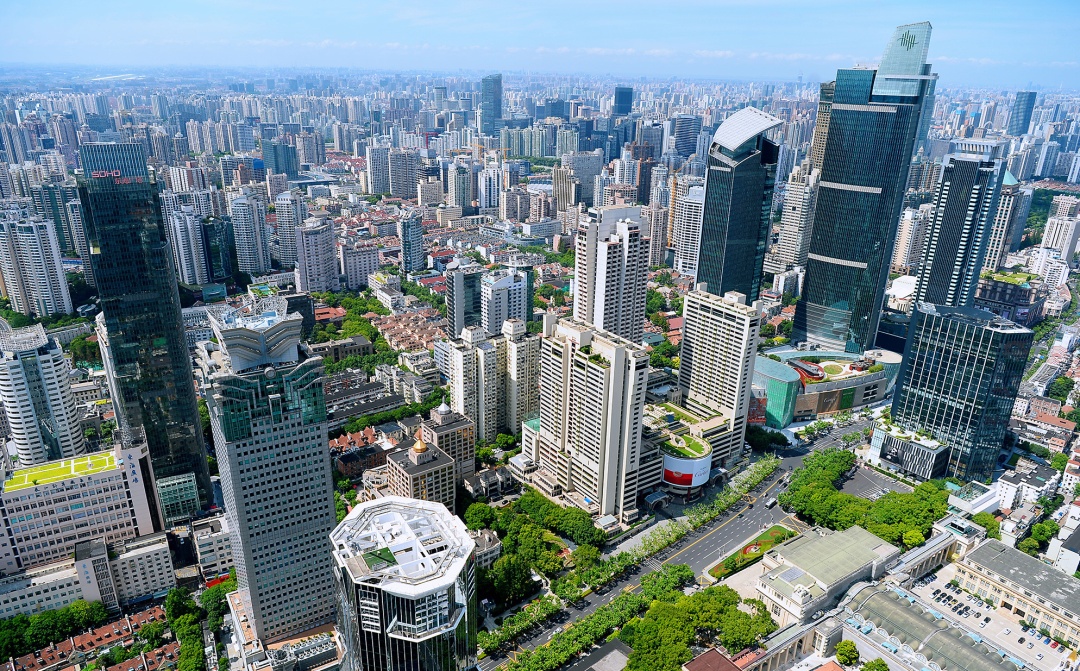
Jing’an has kicked off its “15th Five-Year Plan (2026–2030),” a key stage in its bid to become a modern international urban district.
By 2030, the district aims to advance reform and opening-up, achieve high-quality development, expand access to a high standard of living, and maintain leading governance efficiency. It also plans to strengthen its ability to attract high-end resources, lead in fashion and trends, drive technological innovation, provide quality services, and ensure modern governance. Jing’an seeks to serve as a model of openness, a benchmark for high-quality development and a “people-centered” urban district.
By 2035, the district targets a doubling of per capita GDP compared with 2020 and the full establishment of a modern international urban district.
To reach these goals, Jing’an will focus on four development priorities. The district will attract high-end resources and talent, strengthen capital markets, and expand the presence of multinational headquarters, while promoting new trade formats, including digital, cross-border, green and offshore trade. Innovation and research integration are also a priority, with support for data intelligence, life sciences and other emerging industries, alongside initiatives linking fashion, culture and technology to bring breakthroughs to market.
The district will also build high-end industrial clusters and service hubs, nurturing leading enterprises and embedding professional services across modern industries. In addition, Jing’an will deepen two-way openness, encouraging foreign and domestic investment in sectors including biomedicine, cosmetics and high-end consumption. Its “Global Service Providers” program will help local companies expand overseas and create one-stop platforms for trade, shipping and innovation collaboration.
Jing’an is advancing its position as a core area for international consumption, with a focus on world-class commercial landmarks. The district plans to develop Nanjing Road W. into a global shopping destination, linking main streets with side streets, upgrading retail spaces, diversifying offerings and attracting top domestic and international brands.
It also aims to lead in first-to-market launches, including new products, cultural and sports events and performances, positioning the area as a global “first-release” stage. Local brands will be supported through incubators and design showrooms, while partnerships with international fashion labels, top art institutions and creative innovators will create a high-profile “art, fashion and consumption” hub.
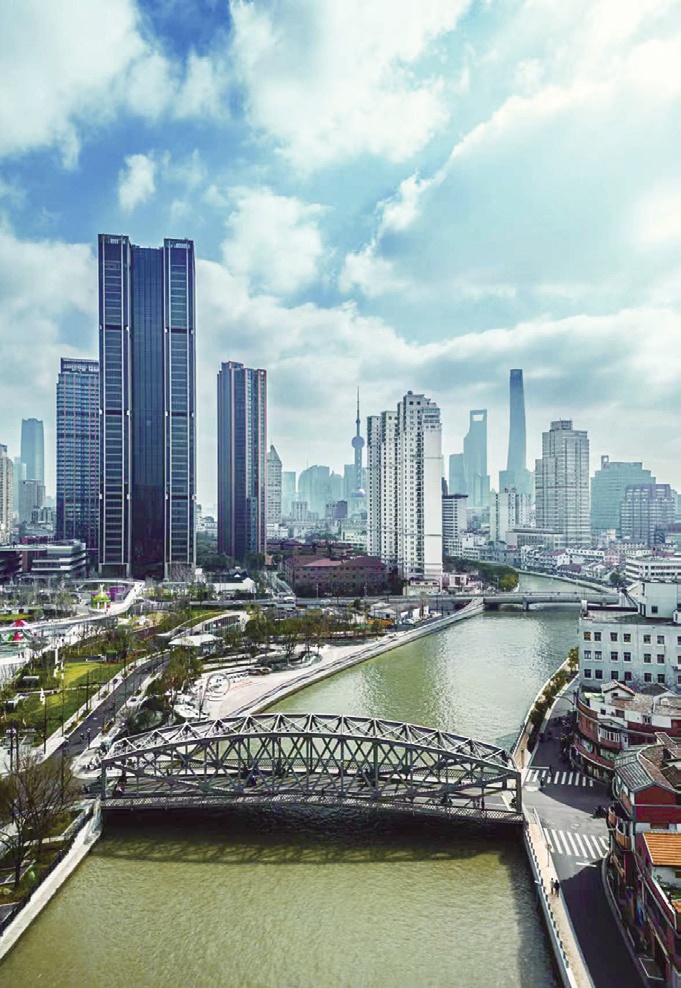
The district will focus on three functional zones to drive high-quality urban development. The Nanjing Road W.-Suhewan CAZ zone will emphasize fashion, trendsetting and international positioning, leveraging commercial and waterfront assets to create a world-class central activity hub. The Daning zone will integrate production, life and ecology, combining technology, cultural innovation, research and residential life while enhancing park spillovers and the experience economy. The Shibei zone will concentrate on science, headquarters, and ecological development, fostering integration of technology and industrial innovation.
Key Initiatives to Improve
Residents’ Well-Being in 2026
Delegates Voice Approval for
Jing’an’s 15th Five‑Year Plan
Wu Jiani
Director, Linfen Road Subdistrict
“I am very encouraged by the district’s plans to implement ‘AI + public services.’ This strongly supports our ongoing efforts to apply smart technologies in governance and opens new opportunities for artificial intelligence to benefit industries and improve everyday life.”
Chen Kunwei
General Manager, Hangzhou Branch, Savills Shanghai
“I recommend Jing’an build a one‑stop commercial real estate service platform to support foreign companies entering the district and local firms going global, offering full‑chain services from overseas market research to cross‑border transactions and operations. This would lower barriers to global expansion and position Jing’an as a key hub connecting international business resources.”
Yang Wenkai
General Manager, Government & Enterprise Key Accounts, China Telecom Shanghai
“I suggest the Jing’an government work closely with state‑owned enterprises to support private and small businesses, while fostering government‑industry‑academia collaboration to drive local development. Setting up dedicated funds for digital transformation pilots and partnering with universities to train talent will give strong intellectual support to Jing’an’s ‘15th Five‑Year Plan.’”
Yan Hua
Founder, Colormen Salon
“I recommend creating a cross‑generational, cross‑space cultural platform to connect office workers and older community residents, fostering cultural interaction between high‑rise business areas and traditional neighborhoods, as well as between commercial districts and local communities.”
Chen Jiaxin
Director, Public Affairs, L’Oréal North Asia & China
“Jing’an, as a testing ground and demonstration zone, could drive domestic demand by building new ecosystems, engaging new consumers, and creating new experiences. The district could leverage its beauty and cosmetics cluster to pilot innovative R&D collaborations and accelerate product commercialization. It could also tap the potential of its senior population and energize streets with creative exhibitions, pop‑up events and festivals, turning shopping areas into vibrant cultural hubs.”
编辑:徐悦琳
资料:区新闻办、上海日报
转载请注明来自上海静安官方微信